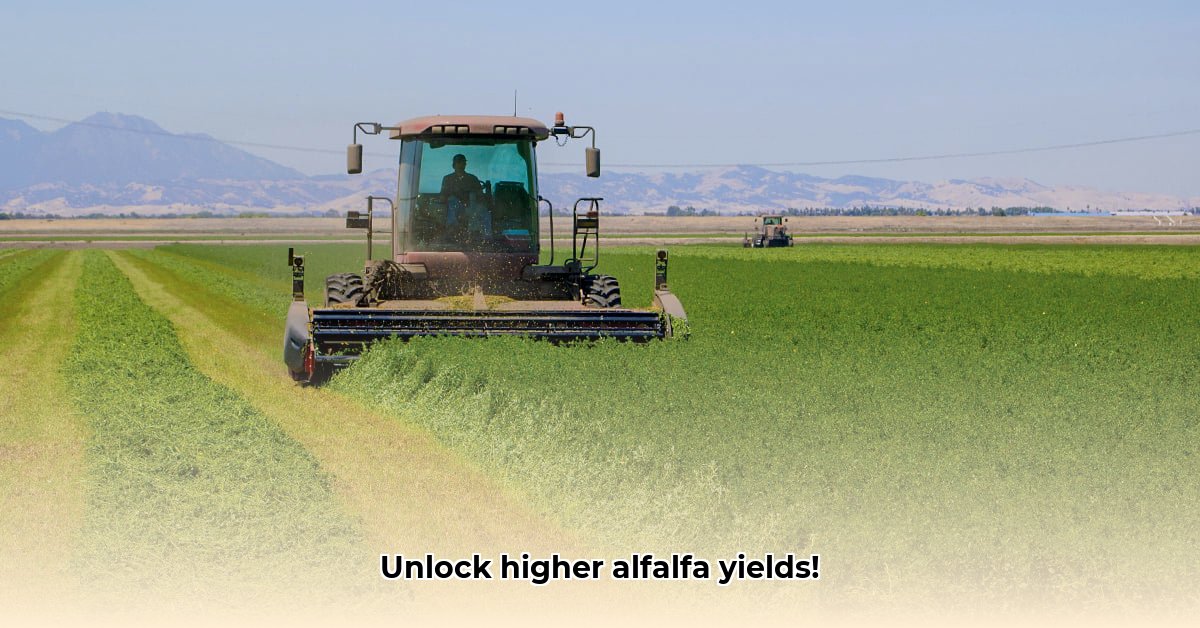
Growing alfalfa sustainably requires maximizing yields while minimizing environmental impact. This guide outlines effective strategies, highlighting how Tractor Supply can be your partner in achieving both. We'll cover crucial aspects from water management to harvest optimization. Are you ready to boost your bottom line and protect our planet? For more information on fertilizers, check out Tractor Supply Fertilizers.
Making the Most of Every Drop: Water Management for Alfalfa
Water is a precious resource. Inefficient irrigation leads to lower profits and environmental damage. Smart irrigation practices are key to maximizing yields while conserving water.
Efficient Irrigation Strategies for Alfalfa
- Drip Irrigation: This method delivers water directly to the roots, reducing evaporation. Consider subsurface drip irrigation (SDI) for optimal efficiency (see detailed guide below).
- Soil Moisture Sensors: These tools precisely measure soil moisture, preventing overwatering and waterlogged soil, a significant cause of root rot.
- Strategic Scheduling: Adjust your irrigation schedule based on weather patterns and soil moisture levels. Avoid watering during the hottest parts of the day to minimize evaporation.
Tractor Supply offers a wide range of irrigation equipment, from basic drip systems to advanced sensor-based technology. Their experts can assist you in selecting the ideal solution for your farm’s specific needs.
Key Takeaway: Efficient water management improves profitability and reduces your farm's environmental footprint. Investing in smart irrigation technology is a sound investment for long-term success.
Nourishing Your Soil: Sustainable Fertilization Techniques
Healthy soil is fundamental to high alfalfa yields. Sustainable fertilization focuses on providing the right nutrients at the right time, minimizing environmental harm.
Sustainable Fertilization Practices
- Regular Soil Testing: Analyze your soil regularly to identify nutrient deficiencies and avoid unnecessary fertilization.
- Organic Fertilizers: Compost and manure improve soil structure, promote beneficial microbes, and enhance moisture retention, offering environmentally friendly nutrient replenishment.
- Cover Cropping: Planting cover crops between alfalfa harvests protects soil from erosion, adds organic matter, and suppresses weeds, often reducing the need for herbicides.
Tractor Supply provides a complete selection of organic and conventional fertilizers to match your needs and budget. Their staff can help you choose the best options for your soil type and alfalfa variety.
Key Takeaway: Soil health is paramount to sustainable alfalfa farming. Regular testing and the use of organic fertilizers and cover crops are essential for long-term productivity and environmental stewardship.
Taming the Weeds: Sustainable Weed Control Strategies
Weeds compete with alfalfa for resources, reducing yields. Integrated Pest Management (IPM) is a sustainable approach focusing on prevention rather than relying solely on herbicides.
Sustainable Weed Management in Alfalfa Production
- Proper Planting Density: Ensure appropriate spacing between alfalfa plants to minimize weed establishment.
- Crop Rotation: Rotating crops disrupts weed cycles, reducing their population over time.
- Weed Control Products: Use herbicides only as a last resort and choose environmentally friendly options when necessary.
Tractor Supply stocks various weed control products. However, consult your local agricultural extension agent to create a customized IPM plan appropriate for your specific conditions.
Key Takeaway: Proactive weed control strategies—focused on prevention through IPM—are more sustainable and often more cost-effective than solely relying on herbicides.
Choosing the Right Alfalfa Variety: A Crucial Decision
Selecting the right alfalfa variety significantly impacts yield and resilience. Consider your specific climate, soil type, and desired yield when making your selection.
Selecting the Right Alfalfa for Your Farm
- Climate Considerations: Choose drought-resistant varieties for arid climates.
- Disease Resistance: Opt for varieties known for their resistance to common alfalfa diseases to minimize the need for pesticides.
- Yield Potential: Select varieties with high yield potential for your specific growing conditions.
Tractor Supply offers many certified alfalfa seed varieties. Consult their staff to determine the most suitable variety for your farm's unique environment.
Key Takeaway: The right alfalfa variety is crucial for success. Talk to experts and consider factors such as climate, disease resistance, and yield potential to make an informed decision.
Harvesting and Preservation: Getting the Most from Your Alfalfa
Harvesting timing directly affects alfalfa's nutritional value. Haylage is a popular preservation method that retains more nutrients compared to dry hay.
Optimizing Alfalfa Harvest and Preservation
- Optimal Cutting Height: Harvest at the appropriate stage of growth for maximum nutritional value.
- Haylage Production: Consider haylage as a highly effective method of preserving alfalfa's nutritional quality.
Tractor Supply offers a range of harvesting and haylage-making equipment. Investing in quality equipment boosts yields and maximizes profitability.
Key Takeaway: Proper harvest timing and preservation methods are crucial for preserving the nutritional value of your alfalfa, improving livestock feed quality.
Planning for the Long Haul: Sustainable Farming for the Future
Sustainable agriculture is about building a resilient and profitable farm for years to come. Diversification and carbon sequestration practices play crucial roles in securing your farm's future.
Long-Term Strategies for Sustainable Alfalfa Farming
- Crop Diversification: Include diverse crops in your rotation to improve overall soil health.
- Carbon Sequestration: Explore carbon sequestration practices; these may offer additional income streams in the future.
Tractor Supply can provide information and resources to help you adopt new technologies and practices for a more sustainable and prosperous future in farming.
Key Takeaway: Sustainable farming is a long-term commitment. Consistent implementation of best practices ensures a profitable and environmentally friendly operation for generations to come.
How to Implement Water-Efficient Subsurface Drip Irrigation (SDI) in Sustainable Alfalfa Farming
Subsurface drip irrigation (SDI) offers a highly efficient way to deliver water directly to alfalfa roots, minimizing water waste and improving yields. Let's explore the step-by-step implementation.
Implementing SDI: A Step-by-Step Guide
- Site Assessment: Thoroughly assess your field's soil type, topography, and water availability.
- System Design: Consult with irrigation specialists to design a system optimized for your specific conditions.
- Installation: Carefully install the drip lines, ensuring proper depth and even spacing.
- System Testing: Thoroughly test the entire system before planting to identify and fix any leaks or issues.
- Alfalfa Planting: Plant your alfalfa at the recommended spacing for your chosen variety.
Maximizing SDI's Benefits
- Regular Maintenance: Regularly inspect and clean the drip lines to maintain efficiency.
- Fertigation: Combine SDI with fertigation—applying fertilizers through the irrigation system—for improved nutrient delivery.
- Moisture Monitoring: Regularly monitor soil moisture to adjust irrigation schedules as needed.
Key Takeaway: Investing in SDI is a valuable strategy for water conservation, improved yields, and the long-term health of your soil and environment. While initial costs for SDI installation are higher than some alternatives, the long-term benefits substantially offset this. Consult your local agricultural extension service or a certified irrigation consultant to determine the ideal SDI system for your specific field conditions.